Shrub & Hedge Trimming in North Redington Beach Florida

Your Full Service Lawn Care Professionals
Schedule Your Service Today
Call us
727-686-1223
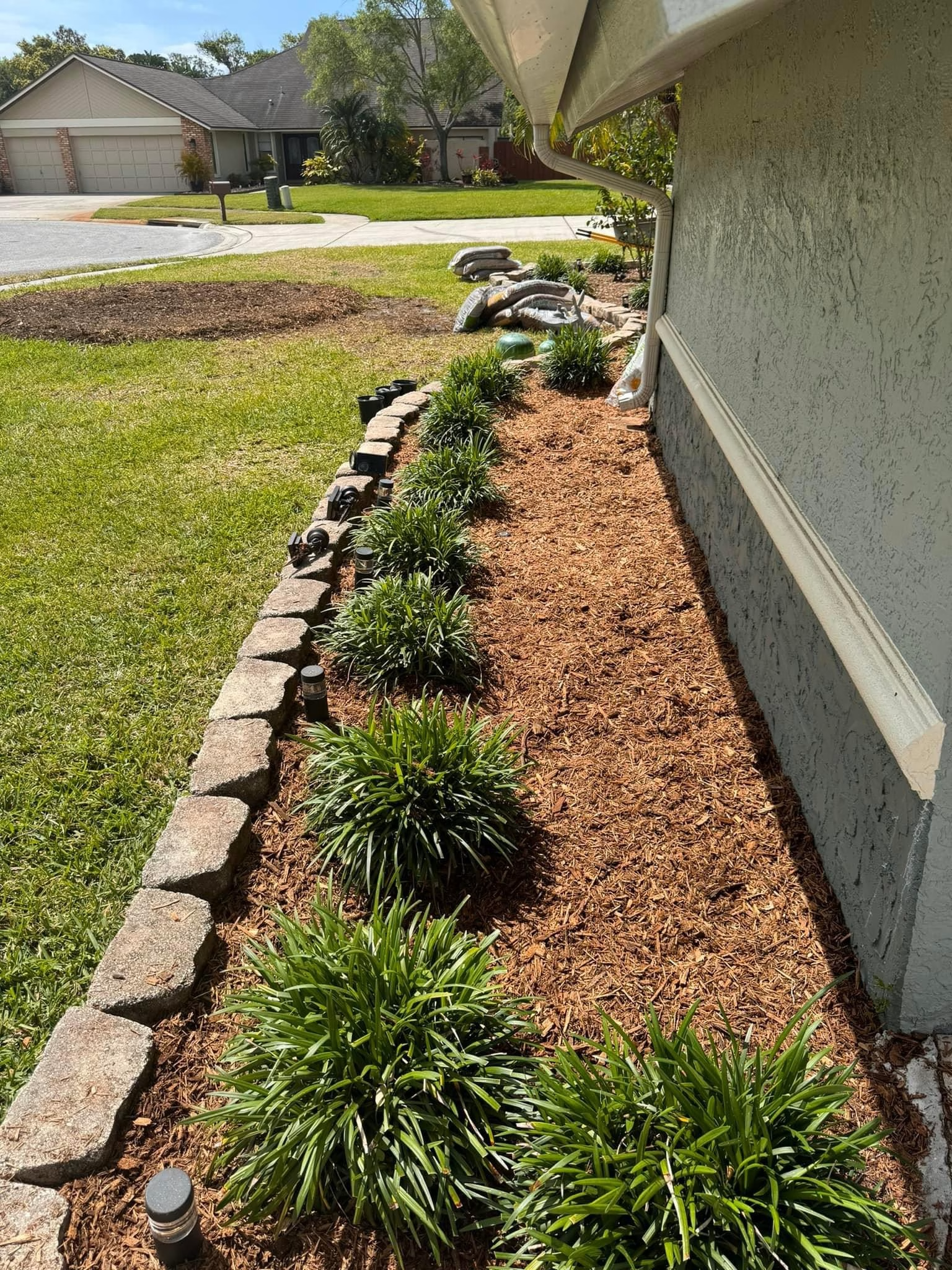
Shrub & Hedge Trimming in North Redington Beach Florida
Hedges have a way of staying shaped longer than they should. They hold their lines for a few weeks, then soften. Then the top starts pushing out. Then one side grows faster than the other and the whole hedge starts looking lopsided. By the time you notice, it’s already past the shape it was supposed to hold.
A Low Cost Lawn Service provides shrub and hedge trimming throughout North Redington Beach Florida and the surrounding Pinellas County area. We work with homeowners in beach communities like Treasure Island, Madeira Beach, and Indian Rocks Beach, as well as inland neighborhoods in Largo, Seminole, and Pinellas Park. Along with targeted trimming, we also handle landscape maintenance for ongoing plant care and landscaping for new plantings and redesigns.
Hedges vs. Shrubs: Why the Difference Matters
The words get used interchangeably, but hedges and shrubs are managed differently.
Hedges are formal. They’re meant to hold a specific shape — usually a squared top, straight sides, and crisp edges. Hedges are trimmed to a pattern, not to the plant’s natural form. Power shears are the right tool.
Shrubs are usually kept in their natural form. The goal isn’t to force them into a geometric shape — it’s to remove excess growth, encourage branching, and keep the plant healthy. Hand pruners and loppers are often better than shears for this.
Handling a formal hedge with hand pruners takes forever. Handling a natural-form shrub with power shears flattens the plant. The right approach depends on which one you actually have.
The Most Common Trimming Mistake in North Redington Beach Florida
If there’s one trimming error we see most often, it’s timing the trim around the wrong lifecycle stage.
Bloom Timing: New Wood vs. Old Wood
Different flowering shrubs bloom at different times, and they set their flower buds on different types of growth:
Shrubs that bloom on new wood (current season’s growth):
-
Set buds on growth that appears this year
-
Trim in late winter or early spring before new growth starts
-
Examples: crape myrtle, hibiscus, roses
Shrubs that bloom on old wood (last year’s growth):
-
Set buds on growth that developed the previous year
-
Trim immediately after their bloom cycle ends
-
Trimming before bloom cuts off the buds — you lose the flowers for the whole season
-
Examples: azaleas, gardenia, some hydrangeas
If you trim a spring-blooming azalea in late winter, you cut off the buds before they open. It’s one of the most common mistakes homeowners make — and it means no flowers until next year.
The “Shaving” Problem
Power shears used incorrectly cause a specific type of damage. If you only trim the outer edge of a hedge, the plant continues pushing new growth at that outer layer — but the interior becomes bare and woody. Over time, the hedge looks fine from a distance but is hollow inside. This is called “shaving.”
Proper trimming involves cutting slightly into the plant so it maintains inner density and outer shape. This is why hedge trimming is often done with more care than a simple outer pass.
Trimming Too Low or Too Aggressive
Some hedges and shrubs don’t recover well from aggressive cuts. Cutting too far back into old wood (where there’s no live growth) can leave dead sections that never fill back in. Certain species — including many broadleaf evergreens — regenerate poorly from bare wood.
Common Shrubs and Hedges in North Redington Beach Florida Yards
Different plants have different trimming needs. Here are the most common species we work with in Pinellas County.
Viburnum (Sweet Viburnum, Podocarpus)
Popular for tall hedges and privacy screens. Responds well to regular trimming and can be shaped formally or naturally. Fast growers — often need trimming every 6-8 weeks during growing season.
Podocarpus
A common formal hedge choice in Pinellas County. Keeps a sharp shape well. Trims cleanly with shears. Tolerates regular maintenance.
Ligustrum (Japanese Privet)
Fast-growing, dense hedge. Popular for property borders. Responds well to aggressive trimming. Can be maintained formally with regular cuts.
Ficus Hedge
Very common in coastal areas. Fast-growing and forms dense screens quickly. Needs frequent trimming during growing season to stay in bounds. Salt-tolerant.
Ixora
Blooming shrub, not a hedge. Blooms on new wood — best trimmed in late winter or early spring. Salt-sensitive; coastal specimens may struggle.
Hibiscus
Blooms on new wood — trim in late winter to encourage blooming. Individual flowers should be deadheaded regularly during bloom season. Not ideal for formal hedges.
Azalea
Blooms on old wood — trim immediately after spring bloom. Trimming in late winter or early spring cuts off the buds and eliminates the bloom cycle.
Gardenia
Blooms on old wood — same timing rule as azaleas. Trim right after bloom ends.
Rule of thumb: If you’re not sure when to trim a specific plant, wait until after it flowers. That’s almost always safe, because the plant has already finished blooming and has time to set next year’s buds.
Coastal Salt Air: A Pinellas-Specific Concern
If your property is in Treasure Island, Madeira Beach, Redington Beach, Indian Rocks Beach, or any of the Gulf-adjacent communities, salt air affects your hedges and shrubs.
Salt burn happens when windborne salt deposits on leaves and damages leaf tissue. Symptoms include:
-
Brown or scorched leaf edges
-
Leaf drop, especially on the windward side
-
Slower growth and reduced bloom
-
Dead tips on outer branches
Part of coastal hedge care is removing the salt-burned growth — the dead tips need to be trimmed back so the plant can push new growth. If this damage isn’t addressed, the dead tissue stays on the plant and invites pests and disease.
Not every trimming company adjusts for coastal conditions. We do, because much of our service area is coastal.
Hurricane Season: When to Trim, When to Wait
June through November is hurricane season. During that window, hedging requires a bit more thought.
Pre-storm trimming is beneficial — but should be done well in advance, not days before a storm. Cutting back dense overgrowth reduces wind resistance and removes dead branches that could become projectiles.
Aggressive trimming right before a storm is risky. Fresh cuts are vulnerable to wind and salt damage, and the plant has less time to recover before stress hits. If a storm is forecast within a week, we recommend waiting until after it passes.
Post-storm trimming is often about safety — removing broken limbs, cleaning up damaged sections, and evaluating what the plant needs to recover.
What a Shrub & Hedge Trimming Service Includes
Every trimming visit includes the essentials.
-
Shaping — trimming hedges and shrubs to their intended shape
-
Dead growth removal — cutting out dead branches and dead tips
-
Salt damage removal (coastal properties) — trimming back burned foliage
-
Cross-branch removal — cutting stems that rub against each other
-
Debris cleanup — raking and collecting trimmings
-
Hauling — removing all cuttings from the property
For larger hedges and taller shrubs, we may bring shears, hand pruners, loppers, and pole tools depending on the plant. For flower bed shrubs, we may recommend weed removal if beds need additional attention.
What Shrub & Hedge Trimming Costs in North Redington Beach Florida
Trimming is typically priced per job, based on the number of plants, their size, and the level of trimming needed.
What drives the price:
-
Number of plants — more plants, more time
-
Height and density — tall or densely grown hedges take longer
-
Shape — formal hedges require more careful work than natural-form shrubs
-
Accessibility — hedges behind landscaping, on slopes, or in tight spaces take longer
-
Debris volume — larger trimmings mean more hauling
-
Frequency — one-time visits cost more per visit than a maintenance plan
To get a quote: Contact us with a description of your plants — what kind they are, how many, roughly how tall, and any specific concerns. For most residential trimming jobs, we can quote over the phone or by text with photos. For larger or more complex work, we may want to see the property.
One-Time Trimming vs. Ongoing Landscape Maintenance
Some homeowners need a one-time trim to reset overgrown plants. Others want regular trimming as part of a broader landscape maintenance plan.
| One-Time Trimming | Landscape Maintenance Plan | |
|---|---|---|
| Timing | When plants need it | Regular schedule (usually 6-10 weeks) |
| Scope | Focused on shrubs and hedges | Full yard plant care — beds, mulch, weeds, trimming |
| Best for | Resets, pre-event cleanups, specific issues | Ongoing upkeep |
| Contract | None | Optional — no long-term commitment |
If you want a reset trim and to then maintain it yourself, one-time works. If you’d rather not think about it, landscape maintenance handles the entire plant side of your yard on a schedule.
How Trimming Fits With the Rest of Your Yard
Shrub and hedge trimming is one piece of a broader yard care picture. Here’s how it connects:
-
Hedges around a lawn benefit from clean edges cut during lawn mowing or lawn maintenance.
-
Beds around shrubs may need weed removal to keep weeds from crowding plants.
-
Overhanging branches above shrubs can be addressed through tree trimming.
-
Debris from trimming combines with other yard waste if you’re doing a yard cleanup or leaf cleanup.
-
New plantings or replacements after removing overgrown shrubs are handled as landscaping projects.
-
Thin or dead turf around plant areas can be improved with sod installation.
-
Commercial properties with hedge and shrub requirements are handled through commercial lawn care.
Related Services from A Low Cost Lawn Service
-
Landscape Maintenance — Ongoing plant care
-
Landscaping — Design and installation
-
Lawn Maintenance — Scheduled turf care
-
Lawn Mowing — One-time and occasional mowing
-
Yard Cleanup — Broader debris removal
-
Tree Trimming — Tree pruning and canopy work
-
Weed Removal — Bed and turf weed control
-
Leaf Cleanup — Seasonal leaf and debris removal
-
Sod Installation — Turf replacement and installation
-
Commercial Lawn Care — Commercial property maintenance
Areas We Serve
A Low Cost Lawn Service provides shrub and hedge trimming and related services throughout Pinellas County, including:
Questions About Shrub & Hedge Trimming in North Redington Beach Florida
When is the best time to trim hedges in Pinellas County?
For formal hedges (viburnum, podocarpus, ligustrum, ficus), trimming can be done most of the year — with the heaviest cuts during the growing season. For flowering shrubs, timing depends on whether they bloom on new wood or old wood. See the FAQ below or ask us about your specific plants.
How often should hedges be trimmed?
Formal hedges in Pinellas County typically need trimming every 6-10 weeks during the growing season, and less often during the cooler months. Fast growers like viburnum and ficus may need trimming more frequently.
Should I trim my azaleas now?
Probably not. Azaleas bloom on old wood — meaning the flower buds for this year formed last year. Trimming too early cuts off the buds and eliminates the flowers. The right time is immediately after spring bloom. If you’re not sure about a specific shrub, contact us and we’ll tell you the best timing.
What’s the difference between trimming and pruning?
Trimming is generally about shaping and maintaining size — cutting back growth to a defined form. Pruning is more selective — removing specific branches for plant health, structure, or rejuvenation. Most hedges get trimmed; most trees and large shrubs get pruned. See tree trimming for tree-specific pruning work.
My coastal hedge has brown tips. What’s wrong?
That’s likely salt burn — windborne salt damaging leaf tissue near the coast. The fix is trimming back the burned tips so the plant can push new growth. If your property is near the Gulf, this may be a recurring need, especially after windy periods.
Can you trim hedges before a storm?
Yes, but timing matters. Trim well in advance of a forecast storm — not days before. Fresh cuts are vulnerable to wind damage, and the plant needs time to recover. If a storm is within a week, it’s safer to wait.
Do you trim palms?
Palm frond removal is handled as part of leaf cleanup or tree trimming, depending on the height and access. Shrub and hedge trimming focuses on broadleaf plants.
Can you trim hedges for a commercial property or HOA?
Yes. Commercial and HOA hedge trimming is handled through our commercial lawn care program, which includes insurance documentation, flexible scheduling, and multi-property coordination.